 NASA (nasa.gov)
 NASA Robonaut 2
by NASA / GM · February 2011
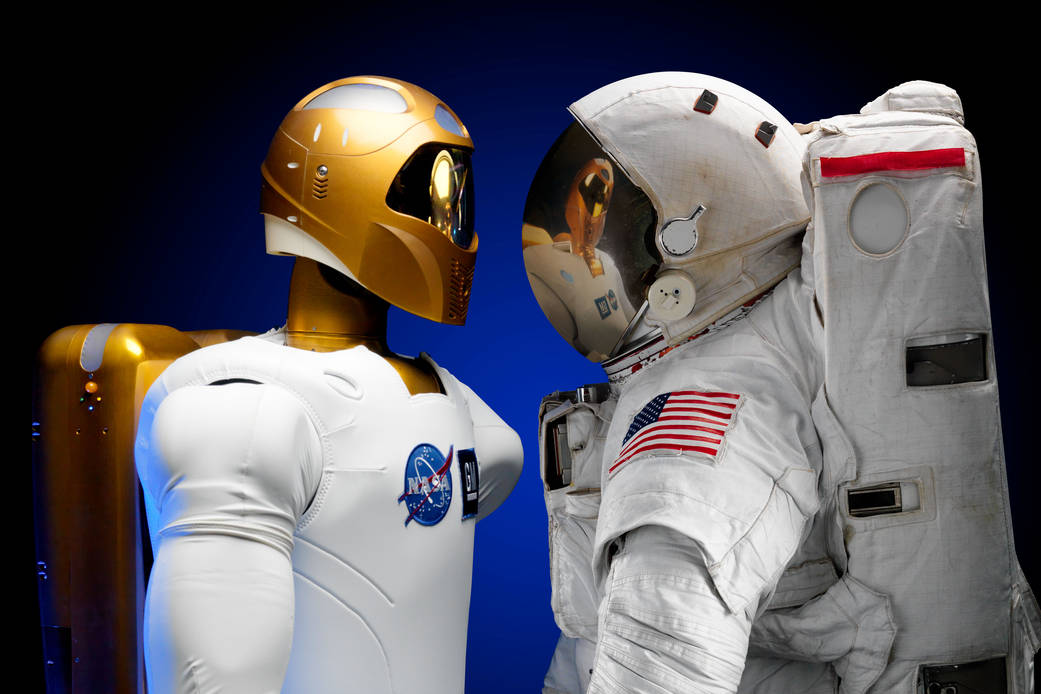
NASA Robonaut 2 (R2) is a dexterous humanoid robot developed jointly by NASA and General Motors for operations aboard the International Space Station. R2 is the first humanoid robot in space, designed to assist astronauts with routine maintenance and tasks in microgravity environments.
Capabilities
Specifications
Physical
Performance
Sensing & Perception
Computing & AI
Connectivity
Safety & Environment
Control
Pricing and Availability
This robot is only available to enterprise customers and commercial partners. Contact the manufacturer directly for pricing, availability, and licensing terms.
Pricing has not been publicly disclosed by NASA / GM. Check the manufacturer's website for the latest information.
AI, Data & Privacy
Strong - all data stays on the device
This robot processes and stores all data locally on the device itself. No personal data leaves the hardware, which provides the strongest level of data protection for EU residents under GDPR. There is no cross-border data transfer risk.
How to keep it private
All computing runs on 38 PowerPC processors housed in the torso. Semi-autonomous operation does not require constant ground control. Communication with ground occurs via ISS LAN (Ethernet) and telemetry link, but the robot can execute pre-programmed tasks independently. Returned to Earth for repairs in May 2018.
Available privacy controls
All data remains within NASA secure network infrastructure, isolated from public internet
Communication occurs only over the ISS local area network with authenticated ground control links
Operators must be authenticated through NASA mission control systems to access the robot
Robonaut 2 is a government research platform operating exclusively within NASA secure infrastructure. All data stays within NASA networks. This is not a consumer or commercial product. Privacy is managed entirely by NASA operational security protocols. No personal or civilian data is collected or processed.
What this means for EU residents
All computing on 38 PowerPC processors housed in torso. Communication via ISS LAN (Ethernet) and telemetry link to ground control. Data stays within NASA secure network infrastructure. Returned to Earth for repairs in May 2018.
Based on
NASA Privacy Policy (2026-03-29)What the AI can do 7 capabilities
Security features 3 features
- nasa-secure-network
- iss-lan-isolation
- ground-control-authentication
Configurability details Limited
Operated via telepresence from ISS crew or ground controllers. Semi-autonomous mode for routine tasks with periodic status checks. No public SDK. NASA/GM joint development with restricted access.
Research notice
The information above is compiled from manufacturer documentation, published privacy policies, independent security research, and community findings as of the dates listed in our sources. AI capabilities, privacy features, and data handling practices may change with firmware updates or policy revisions. We make every effort to be accurate, but errors are possible. Always do your own research before purchasing. Check the manufacturer's latest privacy policy and terms of service directly for the most current information.
Sources
All information on this page is based on the following sources. Links open in a new tab.
- NASA Robonaut Project Page - accessed 2026-03-01
- NASA Robonaut 2 Overview - accessed 2026-03-01
- Robonaut 2 Wikipedia - accessed 2026-03-29
- Robonaut 2 IEEE Spectrum - accessed 2026-03-29
- NASA Privacy Policy - accessed 2026-03-29