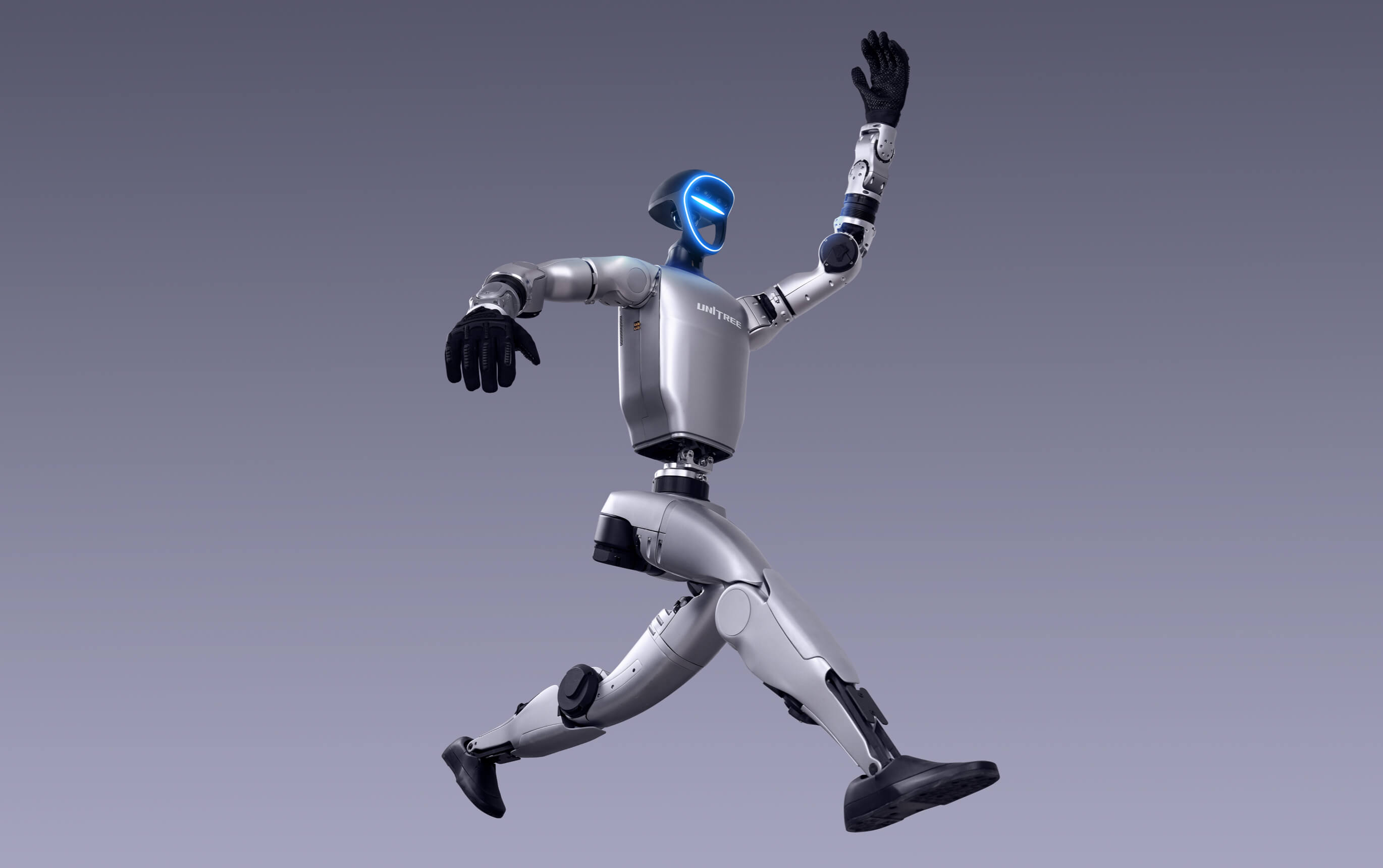
 Unitree Robotics (unitree.com)
 Unitree G1
by Unitree Robotics · May 2024
The Unitree G1 is a consumer-grade humanoid robot offering 23 degrees of freedom, capable of dynamic locomotion, object manipulation, and basic task execution. At $16,000, it is the most affordable full-size humanoid robot available to the general public.
Capabilities
Specifications
Physical
Performance
Power & Battery
Sensing & Perception
Computing & AI
Connectivity
Safety & Environment
Pricing and Availability
This robot is currently available for purchase from the manufacturer or authorized retailers.
Price last verified: March 2026
Known Personas
See all →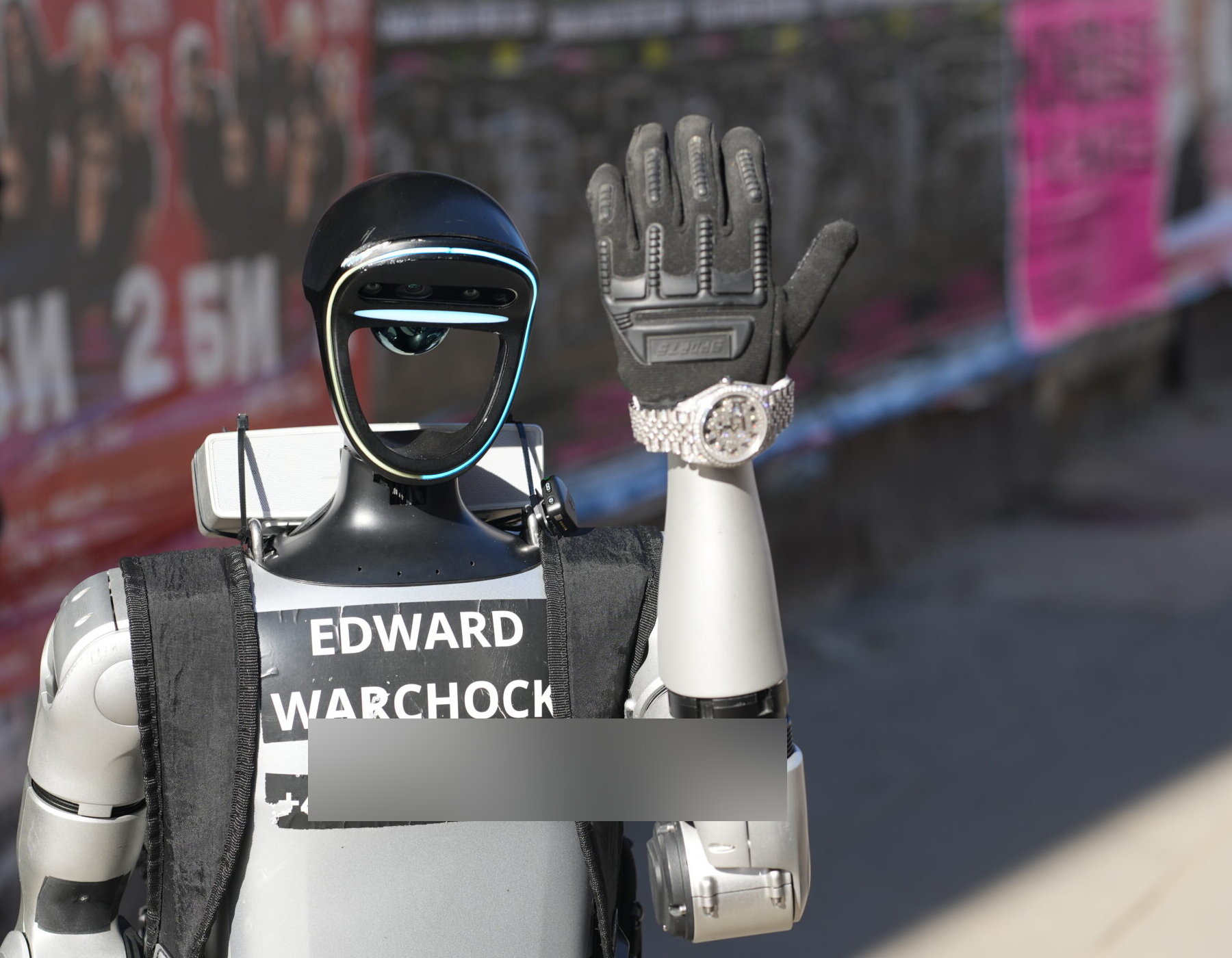
AI, Data & Privacy
Caution - data processed in China
This robot sends data to cloud servers in China. For EU residents, this represents a significant data protection consideration. China's data protection framework differs substantially from GDPR, and data transferred there is subject to Chinese law. EU residents should carefully evaluate whether adequate safeguards are in place before using this product.
How to keep it private
Core locomotion, navigation, and motor control run locally on the NVIDIA Jetson Orin via CycloneDDS/ROS2 without internet. However, telemetry is transmitted to China-based servers whenever a network connection is available. EDU model supports fully air-gapped operation via direct Ethernet or AP mode.
Available privacy controls
Connect directly to the robot via its own Wi-Fi access point, bypassing your home network and internet entirely
Community-recommended approach: block outbound connections at the router level to prevent telemetry transmission to external servers
Use the AP direct connection mode or a dedicated VLAN with no internet gateway. The robot has no built-in privacy controls or opt-out for telemetry. Security researchers found hardcoded keys and disabled SSL verification, so network isolation is the only reliable privacy measure. The EDU model with ROS2 gives you full control over what software runs.
What this means for EU residents
Telemetry data transmitted to China-based servers. Security research found continuous data transmission including sensor data without explicit user consent.
What the AI can do 7 capabilities
Security features 2 features
- aes-encryption-ble
- hardcoded-keys-vulnerability
Configurability details Full SDK
EDU model offers Python and C++ APIs, full ROS2 compatibility, NVIDIA Isaac Sim and MuJoCo support, reinforcement and imitation learning frameworks. Consumer model has limited configurability.
Research notice
The information above is compiled from manufacturer documentation, published privacy policies, independent security research, and community findings as of the dates listed in our sources. AI capabilities, privacy features, and data handling practices may change with firmware updates or policy revisions. We make every effort to be accurate, but errors are possible. Always do your own research before purchasing. Check the manufacturer's latest privacy policy and terms of service directly for the most current information.
Related Articles
The Extinction Clock: How Long Each Humanoid Robot Company Can Survive Without Revenue
Every humanoid robot company in the world is burning cash faster than it is generating revenue. That is normal for an industry in its pre-revenue phase. What is not normal is the variance. Some companies have 5+ years of runway at current burn rates. Others have less than 18 months. The companies that run out of money before the market reaches scale will become footnotes. The ones that survive will define the industry.
The Robot Economy Has a Landlord Problem: Who Owns the Work a Machine Does?
A $100,000 humanoid robot working two shifts in a warehouse generates roughly $180,000-$240,000 in labor-equivalent value per year. The question nobody in the industry is answering clearly is: who captures that value? The purchase model, the lease model, and the Robot-as-a-Service subscription model each create radically different economic structures, with radically different winners and losers.
The Sensory Cliff: Why Robots Can Deadlift 50kg But Cannot Feel a Grape
Boston Dynamics Atlas can lift 50 kilograms overhead. No humanoid robot on Earth can reliably pick up a grape without crushing it, peel a banana, or thread a needle. The gap between what robots can move and what they can feel is the most consequential bottleneck in the industry. Walking was the hard problem of 2020. Touch is the hard problem of 2026.
The $25,000 Robot Arm vs the $16,000 Humanoid: Why Full Bodies Win in the End
FANUC arms cost $25,000 and run 100,000 hours without failure. A Unitree G1 costs $16,000 and falls over. So why are billions flowing into humanoid form factors instead of cheaper, proven arms? Because the real cost of a robot is not the robot. It is the $500,000 factory retooling, the building designed for human bodies, and the $45,000 per year worker the robot is meant to replace.
The First Robot That Quit: What Happens When a Humanoid Breaks Down on Shift
The humanoid robot industry has shipped over 15,000 units. Nobody is talking about how often they break. Motor burnout, sensor drift, software crashes, and battery degradation are generating the first real reliability dataset in history. The companies that solve maintenance will win the market. The ones that ignore it will ship expensive paperweights.
The Insurance Problem: Who Pays When a Humanoid Robot Hurts Someone
When Digit drops a box on a warehouse worker, or a Unitree G1 falls down stairs in a home, who pays? Product liability law was written for toasters and cars, not for machines that make autonomous decisions in unpredictable environments. The insurance industry is scrambling to build frameworks that do not yet exist, and the answers will determine whether humanoid robots ever leave the factory floor.
Bartosz Idzik Built a Robot Personality in Two Hours. It Walked Into Parliament Three Weeks Later.
Bartosz Idzik is a senior UX designer with a track record of winning hackathons across Europe. When Radoslaw Grzelaczyk approached him with a Unitree G1 robot and an idea, Idzik built the conversational AI personality in roughly two hours. Three weeks later, that personality had attracted 200 million video views and walked into the Polish parliament. The speed of his build is not the story. The story is what it tells us about how thin the layer between commodity hardware and cultural phenomenon has become.
A Robot Walked Into Poland's Parliament. Nobody Asked What It Was Recording.
On March 25, 2026, a humanoid robot named Edward Warchocki walked into the Polish Sejm, delivered a speech, and charmed politicians in the hallways. It was funny, viral, and historic. It was also a 35 kg Chinese-made sensor platform with cameras, LiDAR, and microphones walking through one of Europe's most sensitive government buildings. Security researchers have documented that Unitree G1 robots transmit data to servers in China every five minutes. Nobody at the Sejm asked about that.
The $39 Billion Company That Has Shipped 200 Robots: Figure AI and the Valuation-to-Deployment Gap
Figure AI is valued at $195 million per robot shipped. Unitree sells its humanoid for $16,000 and has moved 5,500 units. The valuation-to-deployment gap across the humanoid industry tells you everything about what investors are actually buying.
How a Humanoid Robot Actually Works: A Visual Guide for Everyone Who Is Not an Engineer
You have seen the viral videos. A robot walks across a factory floor, picks up a box, and places it on a shelf. But what is actually happening inside that machine? This guide tears open the hood on five core systems that make a humanoid robot work, using real specs from the robots you can actually buy today.
Why No Country Has a Law for the Robot Walking Down Your Street
A humanoid robot walked through the streets of Warsaw, Poznan, and the corridors of the Polish parliament carrying depth cameras, 3D LiDAR, and a microphone array. It filmed everyone it passed. No law required consent. No regulator intervened. The EU has three major frameworks that could apply - GDPR, the AI Act, the Cyber Resilience Act - and none of them were enforced. This is not a Polish problem. No country on Earth has a functioning legal framework for humanoid robots collecting data in public spaces. The technology is deployed. The law does not exist.
If Your Robot Sends Data to Beijing, Is It a Spy? The Uncomfortable Question at the Heart of the Humanoid Race
Poland bans Chinese cars from military bases but welcomes a Chinese robot to parliament. The US House Select Committee on the CCP warns about Unitree's military connections. China's National Intelligence Law compels cooperation. Yet the Unitree G1 is the most popular humanoid in university labs at MIT, Princeton, and Carnegie Mellon. The cheapest humanoid on earth sends telemetry to servers in China every five minutes, and there is no off switch. Here are the documented facts, the legal frameworks, and the question nobody wants to answer: what does rational policy look like when your most accessible research robot comes from a strategic competitor?
From Roomba to Atlas: The Smart Level Scale Explained, and Where Every Robot Falls
Every robot on this site gets a Smart Level rating from 1 to 10. But what do those numbers actually mean? We walk through the entire scale, level by level, using real machines you can buy, watch, or worry about.
The Unitree G1: The $16,000 Robot That Launched an Industry and a Security Crisis
The Unitree G1 is the most important and most problematic product in the humanoid robot market. At $16,000 it proved that a full bipedal humanoid could be priced like a used car, creating a global developer ecosystem that now spans 40 countries and hundreds of university labs. It also transmits telemetry to servers in China every five minutes, uses a single shared AES key across every unit sold, ships with SSL verification disabled, and was carried into the Polish parliament while running 26 undocumented background services. This is the story of both sides.
Unitree G1 vs Figure 02: The $16,000 Robot vs the $39B Startup
One costs less than a used Honda Civic. The other was built by a company valued at $39 billion before shipping a single commercial unit. How do they actually compare?
Sources
All information on this page is based on the following sources. Links open in a new tab.
- Unitree G1 Official Product Page
- Unitree G1 Specs Sheet - accessed 2026-03-01
- Unitree G1 Security Case Study (Alias Robotics) - accessed 2026-03-29
- Unitree G1 Review (Robozaps) - accessed 2026-03-29